Guide
We encourage you to review the list of frequently asked questions and practical tips on how to perform self-diagnostics and properly operate and maintain your Haldex system, including oil changes and basic maintenance tasks.
Quick Interactive Guide
Which generation of the Haldex controller is in my car?
Decoding the Vehicle Model Year
First, let’s decode the vehicle’s model year (using VAG as an example). We’re interested in the fourth digit of the VIN.

Values in the VIN:
- 1–2001
- 2 – 2002
- 3 – 2003
- 4 – 2004
- 5 – 2005
- June 2006
- July 2007
- August 2008
- September 2009
- A – 2010
- B – 2011
- C – 2012
- D – 2013
- E – 2014
- F – 2015
- G – 2016
- H – 2017
- I – 2018
- J – 2019
- K – 2020
- L – 2021
- M – 2022
- N – 2023
- About – 2024
2nd Generation in VAG Vehicles
Generation 2 is available in the following VAG vehicles:
- Audi A3 S3 8P Quattro (pre-2004 … 2009)
- Audi TT/TTS 8J Quattro (pre-facelift) 2007 … 2009
- Volkswagen Golf 1K Mk5, R32, 4Motion 2004 … 2008
- Volkswagen Passat 3C, 4Motion, Santana, CC, 2005 … 2009
- Volkswagen Transporter T5 (pre-facelift) 2003 … 2009
- Seat Altea 2007 … 2010
- Seat Alhambra 7M 2005 … 2010
- Skoda Octavia 1Z 2004 … 2009

4th Generation in VAG Vehicles
Generation 4 is available in the following VAG vehicles:
- VW Golf Mk6 5-door 4Motion, 2008–2012
- 2008–2012 VW Golf R Mk6 5-door
- VW Tiguan B6 2008, 2009 … 2014
- VW Sharan 7N Mk2 2011 … 2015
- VW Passat, CC, B7 2010 … 2015
- VW Transporter T5 (facelifted) 2009–2015
- VW Caddy Mk3 2010–2015
- Audi A3 S3 8P (facelifted) 2009 … 2012
- Audi TT / TTS / TTRS, 8J, 2008 (mid-cycle refresh) … 2012
- Audi Q3 / RS Q3 2011 … 2013
- Seat Altea XL, Freetrack 2010 … 2015
- Seat Alhambra 2nd Generation 7N 2011 … 2013
- Skoda Yeti 2009 … 2014
- Skoda Superb B6 Type 3T 2008 … 2014
- Skoda Octavia 4×4, Scout, vRS 4×4 (1Z facelift) 2009 … 2013


5th Generation in VAG Vehicles
Generation 5 is available in the following VAG vehicles:
- Audi A1 S1 8x Quattro 2015 … 2018
- Audi A3, S3, RS3 8-valve Sportback Quattro 2012 … 2019
- Audi Q2, SQ2, Quattro 2016 … 2019
- Audi Q3 RS 8 and F3 Quattro Vorsprung 2012 … 2019
- Audi TT TTS TTRS Mk3 FV / 8S Coupe/Roadster 2014 … 2019
- Volkswagen Golf R 4Motion Mk5 5G, 2012 … 2019
- Volkswagen Passat, 4Motion, Santana, Alltrack, 8th Gen 3G, 2015 … 2019
- Volkswagen Sharan, Syncro, 4Motion, 7N 2nd Gen, 2015 … 2019
- Volkswagen Tiguan Mk2 5N, 2015–2019
- Volkswagen Transporter T6, 2016–2019
- Volkswagen Caddy 2K 2015 … 2019
- Volkswagen T-Roc R 4Motion, 2017–2019
- Volkswagen Arteon 2017 … 2019
- Seat Alhambra 2014 … 2019
- Seat Leon 4 5-door Mk3 2012 … 2019
- Seat Ateca 2016 … 2019
- Seat Arona 2017 … 2019
- Seat Tarraco 2018, 2019
- Skoda Octavia Mk3 5E, 2012 … 2019
- Skoda Kodiaq, Scout, vRS, Sportline, 2016 … 2019
- Skoda Superb Mk3 B8 Type 3v, 2015 … 2019
- Skoda Karoq 4×4, 2017 … 2019
- Skoda Yeti 4×4 2014 … 2018


We encourage you to review the tables for VW, Audi, Seat, and Skoda
Gen 2 Table
| Brand | Model | Chassis | Date | ETKA ECU Part Number |
|---|---|---|---|---|
| Audi | TT | 8J | From 2007 to 2010 | 1K0525130L |
| Audi | A3 / S3 | 8P | By the end of 2008 | 1K0525130L |
| VW | Golf | 1K | Before June 2008 | 1K0525130L |
| VW | Passat | 3C | Before June 2008 | 1K0525130L |
| VW | Passat | 3C | Before June 2008 | 1K0525130L |
| VW | Transporter | 7H/7J | By 2010 | 7H0525130L |
| Seat | Altea | 5P | Until June 1, 2009 | 1K0525130L |
| Skoda | Octavia | 1Z | 02522 | 1K0525130L |
Pump and filter
| Pump part number | Filter part number |
|---|---|
| 0AV598549A | 0DZ598574 |
Gen 4 Table
| Brand | Model | Chassis | Date | ETKA ECU Part Number |
|---|---|---|---|---|
| Audi | A3/S3 | 8P | From 2009 to 2013 | 0BR598554A,B,C,D |
| Audi | TT | 8J | 2008>14 2.0 TFSI and 2.5 TFSI | 0BR598554A,B,C,D |
| Audi | Q3 | 8U | Before November 4, 2013 | 0BR598554A,B,C,D |
| Audi | RSQ3 | 8U | Before January 19, 2015 | 0BR598554A,B,C,D |
| Audi | RS3 | 8P | 2011–2013 | 2K0598554B,C |
| Audi | TTRS | 8J | 2010–2014 | 2K0598554B,C,D |
| Seat | Altea | – | After June 1, 2009 | 0BR598554A,B,C,D |
| Seat | Alhambra | 7N | From 2011 to November 3, 2013 | 0BR598554A, B, C, D, E |
| VW | Golf | 1K | – | 0BR598554A,B,C,D |
| VW | Tiguan | 5N | Before November 4, 2013 | 0BR598554A, B, C, D, E |
| VW | Passat | 3C | From June 17, 2008, to 2015 | 0BR598554A,B,C,D |
| VW | Passat | 3C | After June 16, 2008… | 0BR598554A,B,C,D |
| VW | Passat | CC | After August 1, 2008 | 0BR598554A,B,C,D |
| VW | Caddy | 2K | 2009 to 2015 | 0BR598554A,D |
| VW | Transporter | 7H/7J | 2010 to May 31, 2016 | 09N598554A,B |
| Skoda | Yeti | 5L | 2010 to 2013 | 0BR598554A,B,C,D |
| Skoda | Superb | 3T | 2008 to 2015 | 0BR598554A,B,C,D |
| Skoda | Octavia | 1Z | – | 0BR598554A,B,C,D |
Pump and filter
| Pump part number | Filter part number |
|---|---|
| 0AY598549A | 111358 Gen4 |
Gen 5 Table
| Brand | Model | Chassis | Date | ETKA ECU Part Number |
|---|---|---|---|---|
| Audi | Q3 | 8U | As of November 4, 2013 | 0AY907554J |
| Audi | A3/S3 | 8V | After September 7, 2015 | 0AY907554H,J |
| Audi | TT/TTRS | 8S | After 2015/After 2017 | 0AY907554K |
| Audi | RS Q3 | 8U | After January 19, 2015 | 0AY907554J,M,K |
| Seat | Alhambra | 7N | As of November 4, 2013 | 0AY907554J |
| Skoda | Yeti | 5L | After 2014 | 0AY907554J |
| Skoda | Octavia | NE | After 2013 | 0AY907554H,J |
| Skoda | Superb | e.g. | After September 7, 2015 | 0AY907554H,J |
| VW | Tiguan | 5N | As of November 5, 2013 | 0AY907554J |
| VW | Caddy | 2K | After 2016 | 0AY907554L |
| VW | Transporter | 7H/7J | After May 31, 2016 | 0AY907554L |
| VW | Passat | 3C | After 2015 | 0AY907554H,J |
Pump and filter
| Pump part number | Filter part number |
|---|---|
| 0CQ598549 | None |
VOLVO
Haldex generations in Volvo vehicles:
- V40 – 2013 … 2018 – 5th-generation Haldex
- V50/S40 – 2005 … 2010 – 2nd-generation Haldex
- V60 – 2011 … 2012 – 4th-generation Haldex
- V60 – 2013 … 2018 – 5th-generation Haldex
- V70 – 2003 … 2005 – 2nd-generation Haldex
- V70 – 2006 … 2008 – 3rd-generation Haldex
- V70 – 2009 … 2012 – 4th-generation Haldex
- V70 – 2013 … 2016 – 5th-generation Haldex
- V90 – 2017 … 2018 – 5th-generation Haldex
- V70/XC70 – 2003 … 2005 – 2nd-generation Haldex
- V70/XC70 – 2006 … 2007 – 3rd-generation Haldex
- S60 – 2003 … 2006 – 2nd-generation Haldex
- S60 – 2007 … 2009 – 3rd-generation Haldex
- S60 – 2011 … 2012 – 4th-generation Haldex
- S60 – 2014 … 2018 – 5th-generation Haldex
- S80 – 2003 … 2005 – 2nd-generation Haldex
- S80 – 2006 … 2008 – 3rd-generation Haldex
- S80 – 2013 … 2016 – 5th-generation Haldex
- S90 – 2017 … 2018 – 5th-generation Haldex
- XC60 – 2009 … 2012 – 4th-generation Haldex
- XC60 – 2013 … 2018 – 5th-generation Haldex
- XC70 – 2008 – 3rd-generation Haldex
- XC70 – 2009 … 2012 – 4th-generation Haldex
- XC70 – 2013 … 2016 – 5th-generation Haldex
VW, Audi, Skoda, Seat: 5th-Generation Haldex – Details and Common Faults
5th-generation Haldex system
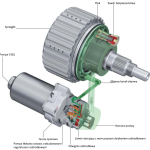
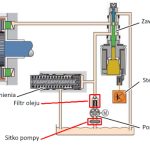
This system consists of only a few components. It includes a control unit that powers a pump equipped with a filter screen. When pressure is generated, the piston applies force to the clutch assembly, which activates the four-wheel drive. The system also features a safety valve that releases excess oil pressure.

Unlike previous generations, this model does not feature a filter in the form of a replaceable cartridge. The system also lacks the "n373" valve for adjusting the clutch engagement angle and does not include pressure sensors. All pressure readings displayed in the measurement blocks of diagnostic tools are estimates only and are for reference purposes.
When scanning a vehicle to read error codes, it is important to use a reliable diagnostic system. Otherwise, you may find that no error codes are stored!
Common error codes that may occur:
- 131599 – All-wheel-drive clutch – U0114 00 [009] – No communication (usually an ECU issue)
- 131599 – All-wheel drive clutch control module – C1113 07 – Intermittent fault (usually an issue with the ECU)
- 16670 – All-wheel drive – C1113 07 [008] – Mechanical failure (usually a problem with the pump OR/and the transfer case)
- 16671 – Haldex clutch pump – C1112 04 [008] – Internal system error (pump is faulty AND the ECU module requires repair)
- 16671 – Haldex clutch pump fault – C1112 04 – Passive/intermittent condition (pump is faulty AND the ECU module requires repair)
- 16668 – Haldex clutch pump – C1112 07 [008] – Intermittent mechanical failure (usually a pump issue)
- 16666 – Haldex clutch pump – C1112 13 [008] – Open circuit (usually a problem with the pump)
- 16664 – Haldex clutch pump – C1112 11 – Short to ground
- C111307 – Mechanical failure – Passive/intermittent condition (usually a clogged pump requiring cleaning and readjustment, or an issue with the control box).
16671 – Haldex clutch pump – C1112 04 [008] Internal system error or “C111204 Haldex clutch pump, faulty”
The ISF (Internal System Fault) error occurs when the pump is faulty. However, even after installing a new pump, code 16671 often reappears after being cleared. This is a known software issue in the fifth-generation Haldex controller. In most cases, performing the “Pump Learn” procedure does not resolve the issue—sometimes the error code disappears, but in many cases it remains.
⚠️ WARNING! This issue stems from an internal system table used by the controller software to calibrate current and voltage sensors. If the stored values fall outside the acceptable range, the controller detects an ISF error. This is usually caused by a faulty pump.
In that case, please send the controller to us and we will manually make the necessary changes to the software.
Code 16671 may also be caused by a weak power supply to the Haldex controller. The controller receives two 12V power supplies.
Check both power supplies using a 12V bulb, as this serves as a load test. Do not use a multimeter, because even with loose connections or corroded pins, you will still get a reading of 12V.
The most common causes of a power outage are:
- Blown fuse (the fifth-generation Haldex system in VAG vehicles has two fuses: one under the dashboard in the cabin and the other under the hood).
- A damaged connector located under the rear seats, beneath the plastic covers for accessing the fuel tank. It is a 6-pin connector, of which only 5 pins are in use.


⚠️ WARNING! After installing the new pump, you must perform the adaptation procedure. This will allow the controller to save the correct supply values and ensure proper operation of the Haldex system.


The Haldex controller learns how much power is needed to operate the pump until a specific pressure threshold is reached. This process is carried out by monitoring the pump’s current draw. If the pump is blocked or damaged, the controller records very low adaptive values. As a result, when the system attempts to activate the pump, it does not supply enough power for it to function properly.
It is also extremely important to change the oil regularly and properly, including removing and cleaning the pump strainer (keep in mind that the 5th generation does not have a filter).
IMPORTANT! Change the oil every 30,000 km.
To avoid further problems and costly repairs, it’s best to entrust the repair of Haldex controllers to experienced specialists.
VW, Audi, Skoda, Seat: 4th-generation Haldex – Details and Common Issues
4th-generation Haldex system
This system consists solely of the following components:
- Oil pump with filter screen – "Haldex clutch pump (V181)"
- Filter cartridge
- Pressure accumulator – a spring-loaded piston that maintains a pre-set pressure to ensure an immediate response to a request
- Oil control valve – "Clutch angle adjustment valve (N373)"
- Wet clutch transmission – similar to a motorcycle clutch, the assembly is engaged by a piston actuator built into the structure
- ECU (Electronic Control Unit ) – acts as a slave unit to the ABS/TC/ESP ECU

⚠️ WARNING! When scanning a vehicle to read error codes , it is important to use a reliable diagnostic system. Otherwise, you may find that no error codes are stored!
Common error codes (pump failure):
- 00448 – Haldex clutch pump (V181) – 002 – Lower limit exceeded – Intermittent error
- 00448 – Haldex clutch pump (V181) – 011 – Open circuit – Intermittent fault
- 00448 – Haldex clutch pump (V181) – 011 – Open circuit – Malfunction
- 00448 – Haldex clutch pump (V181) – 011 – Open circuit – Intermittent fault
In this generation, the pump cycles on and off every 20 seconds, which results in significant wear on the pump motor brushes. The typical resistance of a functional pump is 5–8 ohms (according to the manufacturer). In practice, the resistance should not be lower than 2 ohms.
⚠️ WARNING – Testing the pump by connecting it in a short-circuit configuration is not reliable.
We inspect the pump and replace it if necessary. We also recommend changing the oil and filter.

A clogged pump or filter can cause the following errors:
- 02248 – Clutch angle control valve (N373) – intermittent fault
- 01155 – Clutch – 003 – Mechanical fault – Intermittent error
The wear particles from the clutch pack are suspended in the Haldex system oil. Initially, larger particles are captured by the pre-filter near the pump, while finer contaminants are trapped by the filter element.
If oil does not flow properly through the filter element, the hydraulic pressure required to engage the Haldex clutch under load is not supplied. As a result, the clutch slips (which leads to even greater wear and further clogging of the filter!). The ABS/ASC/TCS system detects that the front wheels are rotating faster than the rear wheels, which should not occur when the Haldex clutch is engaged. As a result, error codes related to the clutch and the N373 control valve are generated.
⚠️ WARNING – A faulty Haldex pre-pump (V181) that does not provide adequate oil pressure can cause exactly the same symptoms. This can typically be verified by measuring the resistance—it should be between 5 and 8 ohms (according to the manufacturer). In practice, the resistance should not be lower than 2 ohms.
Common error codes (controller failure):
- 02248 – Clutch angle control valve (N373) – Defect
- 02248 – Clutch angle control valve (N373) – Intermittent error
- 02248 – Clutch angle control valve (N373) – 012 – Electrical fault in the circuit
- 01324 – All-Wheel Drive Control Module (J492) – 004 – No signal/communication
- 65535 – Control module internal memory error – 00-10 – Intermittent error
- 16347 – Control module – EEPROM error – 014 – Malfunction – Intermittent error
- 00003 – Control module – 014 – Malfunction – Intermittent error / Faulty control module – Occasional

Checking the controller's power supply. Using VAG as an example.

In most cases, only 4 pins are used in the 8-pin connector (power and CAN)

Sample diagram (Passat CC)

Please note! Once the control unit has been removed, the car will unfortunately no longer be operational.
To avoid further problems and costly repairs, it’s best to entrust the repair of Haldex controllers to experienced specialists.
4th-generation Haldex – Oil Change. When should the oil in the Haldex system be changed?
⚠️ The oil in the Haldex system should be changed every 30,000 km, and the filter every 60,000 km. If you’re not sure when or if the oil in the Haldex system has ever been changed, it’s also a good idea to remove and clean the oil pump, then reinstall it using new (O-rings).
Here you will find all the parts you need to complete this task – Borg Warner Official Store
Tools needed to perform the service
- Allen/HEX socket wrenches: 8 mm, 5 mm, and 4 mm
- Torque wrench: 5–35 Nm
- Long-nose pliers and a flathead screwdriver
- Diagnostic tool (optional)
Oil change kit:
- Haldex oil: (part no. G 060 175 A2, BorgWarner 2000884)
- Haldex BorgWarner 2003085 filter assembly: (1 x new oil filter, 1 x cover with cap (oil channel) and O-rings, 2 x mounting bolts)
- Used oil container
- A syringe or hand pump for adding new oil
- Paper towels
Oil change
1. Vehicle preparation
- Raise the vehicle on a lift or drive it onto the service ramp.
- Secure the vehicle with wheel chocks and make sure it is stable.
2. Draining the old oil

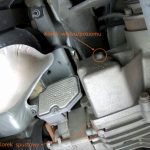
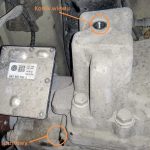
- Before draining the old oil, use a 5 mm Allen wrench to loosen the oil filler cap (located on top of the Haldex housing), and then tighten it back in place. If for some reason the filler cap cannot be unscrewed or becomes damaged, and you open the drain plug first, you will have trouble refilling the system with oil.
- Use an 8 mm Allen wrench to unscrew the oil drain plug.
- Pour all the used oil into the container you have prepared.
- Clean the drain hole and plug before reassembling.
3. Oil filter replacement

- Locate the filter housing (usually secured with two screws).
- Unscrew the housing and carefully remove the filter cap and the old filter. You can insert a screw into the cap and then use pliers to pull it out. Alternatively, you can use a diagnostic tool to activate the pump—it will push the filter out. In this case, do not unscrew the filter cap completely; leave it loosely attached.
- Clean the inside of the housing to remove any oil residue and dirt.
- Install the new filter and the cap with the gaskets. Before installation, lubricate the gaskets with oil to ensure a better seal and make installation easier.
- Tighten the filter housing to the recommended torque (usually 5–6 Nm).
4. Removal and cleaning of the oil pump
- Unplug the pump connector (2-pin connector on the controller)
- Unclip the three power cord connectors from the pump
- Unscrew the two screws securing the pump and remove the pump.
- Thoroughly clean the pump mounting area.
- Unscrew the two screws securing the pump strainer and thoroughly clean the strainer and the pump
- Install the pump using new gaskets/O-rings


5. Filling the system with new oil
- Screw the oil drain plug back into place and tighten it to a torque of 30 Nm. We recommend using a new plug.
- Make sure the vehicle is on level ground to ensure the correct oil level in the system. Use a syringe or hand pump to pour new Haldex oil through the service port until it begins to overflow.
- After filling, screw the service cap back on.
- Make sure the oil temperature is between 20 and 40°C using a diagnostic tool or a thermometer. If necessary, take a short drive to warm up the oil, or wait for it to cool down to reach the required temperature range.
- Using diagnostic tools (such as VCDS), perform a pump and valve test to fill the system with oil.

- Add oil until you reach the correct level (after adding oil, it should flow gently out of the filler hole), making sure the system is properly filled but not overfilled. The total system capacity is 0.85 L; the capacity for an oil change is 0.7–0.75 L.
6. Leak test
- Tighten the fuel cap. Check for leaks around the caps and the filter.
7. Disposal of used oil
- Take your used oil to a waste collection point.
All done!
The Haldex system is now ready to go!
It’s a pretty good DIY video. It shows how to use a diagnostic tool to remove the oil filter. It’s also a good idea to remove and clean the pump strainer and properly top off the oil after reinstalling the pump and filter, as described above.
5th-generation Haldex – Oil Change. When should the oil in the Haldex system be changed?
⚠️ The oil in the Haldex system should be changed every 30,000 km.
⚠️ This generation of Haldex does not have a filter, so we recommend removing the pump during every oil change, cleaning the pump strainer, and then reinstalling it using new O-rings.
Here you will find all the parts you need to complete this task – Borg Warner Official Store
Tools needed to perform the service
- Allen/HEX socket wrenches: 8 mm, 5 mm
- Torque wrench: 5–35 Nm
- Diagnostic tool (optional)
Oil change kit:
- Haldex oil: (part no. G 060 175 A2, BorgWarner 2000884)
- Pump mounting kit: (2 screws, 2 O-rings)
- Used oil container
- A syringe or hand pump for adding new oil
- Paper towels
Oil change
1. Vehicle preparation
- Raise the vehicle on a lift or drive it onto the service ramp.
- Secure the vehicle with wheel chocks and make sure it is stable.
2. Draining the old oil

- Before draining the old oil, use a 5 mm Allen wrench to loosen the oil filler cap (located on top of the Haldex housing), and then tighten it back in place. If for some reason the filler cap cannot be unscrewed or becomes damaged, and you open the drain plug first, you will have trouble refilling the system with oil.
- Use an 8 mm Allen wrench to unscrew the oil drain plug.
- Pour all the used oil into the container you have prepared.
- Clean the drain hole and plug before reassembling.
3. Removal and cleaning of the oil pump
- Unplug the pump connector (2-pin connector on the controller)
- Disconnect the power cord connectors from the pump
- Unscrew the two screws securing the pump and remove the pump.
- Thoroughly clean the pump mounting area.
- Unscrew the two screws securing the pump strainer and thoroughly clean the strainer and the pump
- Install the pump using new gaskets/O-rings

5. Filling the system with new oil
- Screw the oil drain plug back into place and tighten it to a torque of 30 Nm. We recommend using a new plug.
- Make sure the vehicle is on level ground to ensure the correct oil level in the system. Use a syringe or hand pump to pour new Haldex oil through the service port until it begins to overflow.
- After filling, screw the service cap back on.
6. Leak testing and adjustment
- Make sure the oil temperature is between 20 and 40°C using a diagnostic tool or a thermometer. If necessary, take a short drive to warm up the oil, or wait for it to cool down to reach the required temperature range.
- Using diagnostic tools (e.g., VCDS), activate the pump several times (alternatively, you can simply turn the ignition on and off a few times to allow the entire system to fill with oil). Add oil until you reach the correct level (after adding oil, it should gently overflow through the filler hole), making sure the system is properly filled but not overfilled. The total system capacity is 0.85 L; the capacity during a fluid change is 0.7–0.75 L.
- Tighten the fuel cap. Check for leaks around the caps and the filter.
7. Disposal of used oil
- Take your used oil to a waste collection point.
All done!
The Haldex system is now ready to go!
We also recommend this video (in English, but quite intuitive) on how to properly change the oil in a 5th-generation VAG Haldex system
Haldex N373 4th-generation valve for VW / Audi / Seat / Skoda / Ford / Land Rover / Volvo: inspection
Inspection of the Haldex N373 valve
OEM numbers: 0AY598554C, 0BR598554C, 0BS598554C, 109593
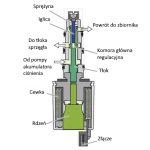
The N373 valve in the fourth-generation Haldex system plays a key role in regulating the oil pressure that controls the multi-plate clutch responsible for engaging the rear-axle drive. It operates based on signals from the control unit, enabling dynamic adjustment of the drive to road conditions. Its proper operation has a direct impact on the effectiveness and smoothness of the 4×4 drive.

The N373 valve is generally a durable component of the Haldex system and rarely fails. However, contamination or wear can cause it to malfunction, resulting in drive slip or noticeable jerks when the rear axle engages.
When inspecting valve N373, we check the following:
Is the valve free of metal shavings, sediment, or hard metal debris?
Coil resistance — should be approximately 3 ohms
Is there a short to ground (the housing) in the coil?
The condition of the O-rings responsible for the valve's seal

If oil does not flow properly through the valve, the necessary hydraulic pressure required to engage the Haldex clutch under load is not supplied. As a result, the clutch slips or jerks when the rear axle is engaged (most often when turning). The ABS/ASC/TCS system detects that the front wheels are rotating faster than the rear wheels, which should not occur when the Haldex clutch is engaged. As a result, error codes related to the clutch and the N373 control valve are generated.
⚠️ WARNING – A faulty Haldex pre-pump (V181) that does not provide adequate oil pressure can cause exactly the same symptoms. This can typically be verified by measuring the resistance, which should be between 5 and 8 ohms.
⚠️ WARNING – A faulty controller can also cause valve errors by incorrectly reading the valve's operating parameters.
Common error codes (caused by a controller malfunction):
- 02248 – Clutch angle control valve (N373) – Defect
- 02248 – Clutch angle control valve (N373) – Intermittent error
- 02248 – Clutch angle control valve (N373) – 012 – Electrical fault in the circuit
- 01324 – All-Wheel Drive Control Module (J492) – 004 – No signal/communication
- 65535 – Control module internal memory error – 00-10 – Intermittent error
- 16347 – Control module – EEPROM error – 014 – Malfunction – Intermittent error
- 00003 – Control module – 014 – Malfunction – Intermittent error / Faulty control module – Occasional

Volvo – Checking the AWD system.
Repair and testing of the Haldex DEM controller – Volvo
Why is the original DEM control unit so important when repairing the Haldex system in a Volvo?
⚠️ WARNING! The Haldex (DEM) controller in a Volvo must be genuine, meaning it must come from that specific vehicle. There are many software versions—a controller from one model year will not work in a vehicle from a different model year. The vehicle model, fuel type, and transmission type are also important.
In such cases, the controller will not communicate properly with the vehicle’s other systems.
We can replace a damaged DEM module with another one, but it is necessary to have the original controller in order to clone its data.
Volvo AWD (DEM) System Malfunctions
Message: "Anti-skid system activation required"
The message “Anti-Skid Service Required ” often appears on the dashboard when the Haldex control module—known as the DEM (Differential Electronic Module) —malfunctions in Volvo vehicles.
Common error codes include:
DEM-0002 / DEM-0003 / DEM-0006 / DEM-0007 / DEM-0008 / BCM-0094 / BCM-0095 / CEM-1A64
DEM-0006 – usually indicates a pump malfunction, but it may also be caused by a fault in the control module’s electronics, which are responsible for powering the pump.
DEM-0007 – This error most commonly involves the pressure sensor, but in some cases it may also be caused by a malfunction in the pump or controller, for the same reasons as error DEM-0006.
Common faults and error codes – DEM controller / Haldex system (Volvo)
P0748 – Pressure Control Solenoid A
P0748-12 – Electrical fault: short to positive (battery)
P0748-1D – Electrical malfunction: abnormal current in the circuit
P0961 – Pressure Control Solenoid 'A' Control Circuit Range/Performance
P0961-62 – Algorithm Error: Signal Inconsistency (signal compare failure)
P1635 – Tire/Axle Out of Acceptable Range
P1635-68 – Algorithm Error: Event Information
P1889 – Oil Pressure Pump Performance
P1889-12 – Short to B+ (Battery Positive)
P1889-14 – Short to Ground or Open Circuit
P1889-18 – Current Below Required Threshold
P1889-19 – Current Above Permissible Threshold
P1889-49 – Internal Electronic Fault (internal failure)
P1889-7A – Mechanical Failure: Fluid Leak or Seal Damage
P1889-71 – Mechanical Failure: Intermittent Fault (intermittent)
P1889-74 – Mechanical Failure: Actuator Slipping (actuator slipping)
Ford Kuga – Details and Common Issues
Coming soon!
Haldex Service – How We Refurbish Your Unit
1. Checking Your Controller's Condition and Repair Options
First up, we do a thorough visual inspection of your controller and then put it through its paces on our test bench. This helps us figure out if we can repair it to ensure it runs reliably for years. If it's severely damaged, no worries – we'll get in touch to offer you alternatives, like swapping it out for a new or refurbished unit. Our main goal is always to give you a lasting and effective fix.
Assessing Your Controller's Health
Here, we really dig deep into diagnosing any damage to your controller to make sure it's actually repairable. We run it on the test bench and take all the crucial measurements.
Controller Beyond Repair? Here's What's Next
If your controller is severely damaged, we've got alternative solutions for you. We can offer a replacement with either a new or a refurbished unit, always making sure it fits your specific needs.

2. Main Board, Components & Casing Repair
Here, we get down to business, repairing the PCB, giving it a thorough clean, and checking it over. We also meticulously fix up the casing, cover, and any other controller components, making sure every little detail is perfect. Everything gets carefully prepped for reassembly.
PCB Repair & Cleaning
We meticulously clean the PCB of any grime and inspect it for damage. If needed, we carry out repairs and get the board ready for its next life.
Controller Casing Refurbishment
We also take care of the control unit housing, fixing any damage to bring back its full functionality and original look.


Once the controller board is repaired, we apply a professional protective coating to shield it from water damage and corrosion. We do the same for the controller's cover. Then, we meticulously reassemble and seal the unit, ensuring your 4x4 drive will run reliably. To wrap things up, we perform a final test to guarantee everything's working perfectly.
Protective Coating & Final Testing
Once the controller board is repaired, we apply a special protective coating to guard against mechanical damage, moisture, and corrosion. To top it off, we run a final test to confirm your controller is working perfectly.


And there you have it! Your Haldex controller is now good as new.
Thanks for taking this virtual repair journey with us. We always go the extra mile to make sure Haldex controller repairs are fast, effective, and super precise.
Here you'll find original BorgWarner service kits (oils, filters, and more)
Wishing you safe and happy travels!